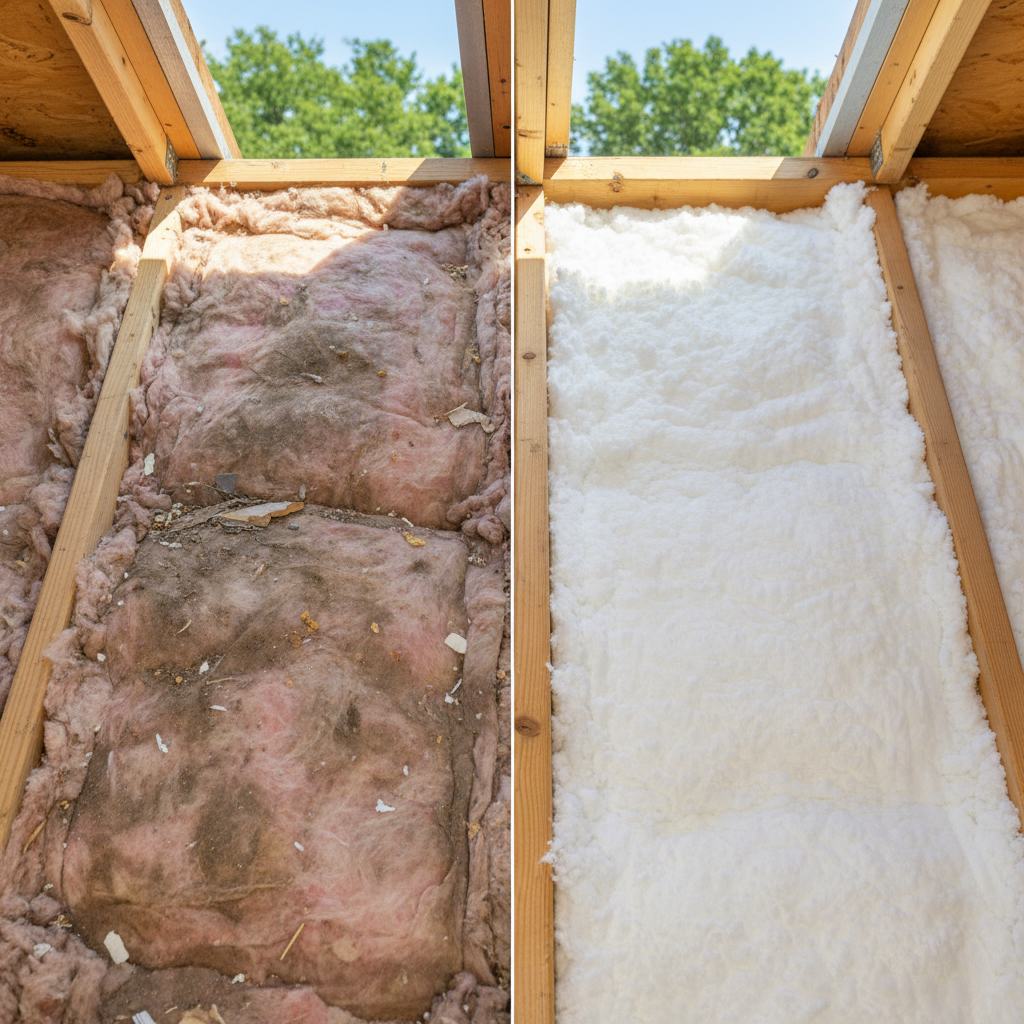
Okay, let's talk about batt insulation. When you're thinking about upgrading your attic or walls, you'll definitely come across a choice: faced or unfaced? It's not just about what costs less; it's really about what works best for your home, especially here with our Texas heat and humidity.
What's the Deal with Faced Insulation?
Faced batt insulation is pretty simple. It has a paper or foil backing, sometimes called a 'vapor barrier' or 'vapor retarder,' stuck to one side of the fiberglass or mineral wool batt. This facing does a couple of things, depending on where you're putting it and what kind of weather we're having.
Here in Schertz, with our hot, muggy summers and winters that aren't too bad, that vapor retarder usually aims to slow down moisture. It stops moisture from moving from the warm, humid outdoors into your cooler, air-conditioned home. Think of it this way: hot air holds more moisture. When that hot, damp air hits a cool surface (like your attic ceiling or wall cavity that's been cooled by your AC), it can condense. And that, my friends, is not good for your framing or for how well your insulation works.
Pros of Faced Batts:
- Moisture Control: This is the biggest plus for us. It helps manage moisture moving around, which is super important in our climate. You're basically trying to keep condensation from forming inside your walls.
- Easier to Put In (Sometimes): The facing can make the batts a bit stiffer. That helps them fit snugly between studs or joists. Plus, the paper flanges often have little tabs for stapling, making them easier to secure.
- Affordable Vapor Retarder: It's a two-in-one product, so you don't have to install a separate vapor barrier.
Cons of Faced Batts:
- Placement is Key: If you install it wrong, or in the wrong spot (like facing the wrong way in certain climates), you could actually trap moisture. For us, the facing usually goes towards the conditioned space.
- Can't Layer Them: You generally don't want to stack faced batts on top of each other. Why? Because you'd be creating multiple vapor barriers, which can really cause problems.
- Fire Risk (Paper Faced): Paper facings can burn. They absolutely need to be covered by drywall or another approved finish material.
Unfaced Batt Insulation: The Bare Bones
Unfaced batt insulation is exactly what it sounds like: insulation without any backing. It's just fiberglass or mineral wool. People often use this when a vapor barrier isn't necessary, or if there's already one there, or if they plan to put one in separately.
Pros of Unfaced Batts:
- Flexible Use: You can stack unfaced batts to get higher R-values without worrying about moisture getting trapped between vapor barriers. This is perfect for attics where you're adding more insulation on top of what's already there.
- Lets Things Breathe: In some spots, you want the wall or attic cavity to breathe a bit more, and unfaced batts let that happen.
- Cost: They're often a little cheaper per batt than faced options. But remember, that savings might disappear if you have to buy and install a separate vapor barrier.
- Fire Safety: Generally, they don't burn easily. This gives you a bit more freedom in exposed areas, though it's still best to cover them up.
Cons of Unfaced Batts:
- No Built-in Vapor Retarder: If your project needs a vapor retarder, you'll have to put it in separately. That means more labor and material costs.
- Can Be Floppy: Without the facing, some unfaced batts can be a bit trickier to handle and fit perfectly. If you're not careful, you'll end up with gaps. And gaps mean air leaks, which means wasted energy.
So, What Should Schertz Homeowners Choose?
For most homes in Schertz, especially in areas like Cibolo Valley Ranch or when you're insulating exterior walls or the attic floor, you'll generally want faced batt insulation with the facing towards the conditioned (warm-in-winter, cool-in-summer) side of the assembly. This helps control moisture moving from our humid outdoor air into your cooler indoor spaces during the summer. That's our main concern, after all.
However, if you're adding a second layer of insulation in your attic on top of existing insulation, or if you're insulating interior walls for sound dampening, unfaced batts are usually the way to go. You don't want two vapor barriers in the same spot, and interior walls don't typically need a vapor retarder anyway.
The main thing is to make sure you're not creating a situation where moisture can get trapped. That's how you end up with mold or rotted wood, and nobody wants that. If you're building new or doing a big renovation, you'll also want to think about your whole house's moisture management plan.
Honestly, when it comes to insulation, getting it right the first time saves you a ton of headaches and money later on. You can buy the best insulation in the world, but if it's installed poorly, it just won't do its job. We've seen it happen too many times.
If you're not sure, or you've got a tricky spot, just give us a call at Peak Insulation Co. We're happy to walk you through your options and make sure you're making the smart choice for your home and your wallet.